Understanding Solo Diving
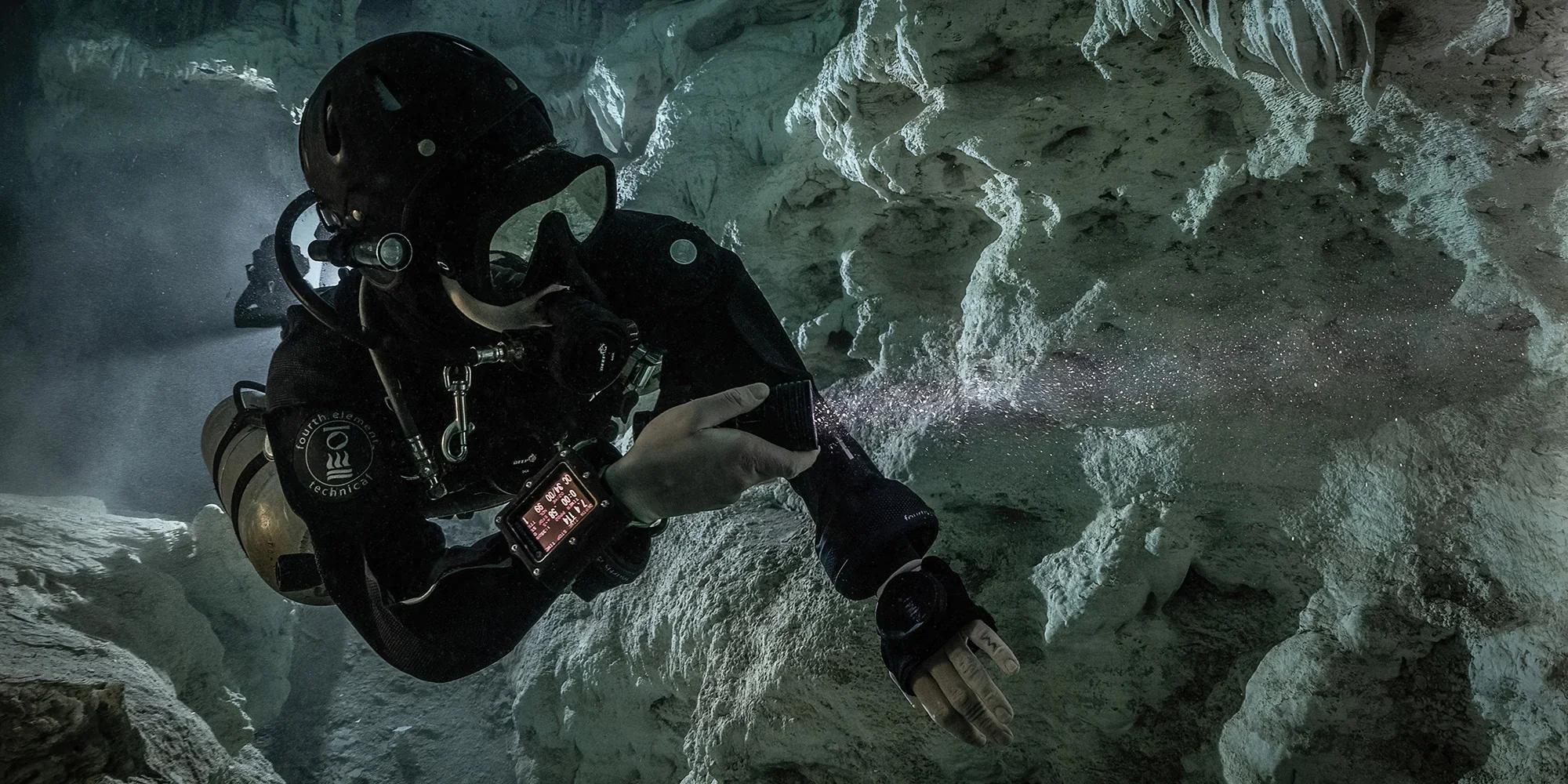
Usually reserved for the most hardened of technical divers, solo diving is often portrayed as an ultimate extreme pursuit.
With numerous certifying agencies and site operators either actively discouraging or outright disallowing solo diving, we take a look at some of the classic myths and misconceptions surrounding going solo, and look to establish whether or not when done responsibly, it is the deep, reflective and rewarding experience some claim it to be.
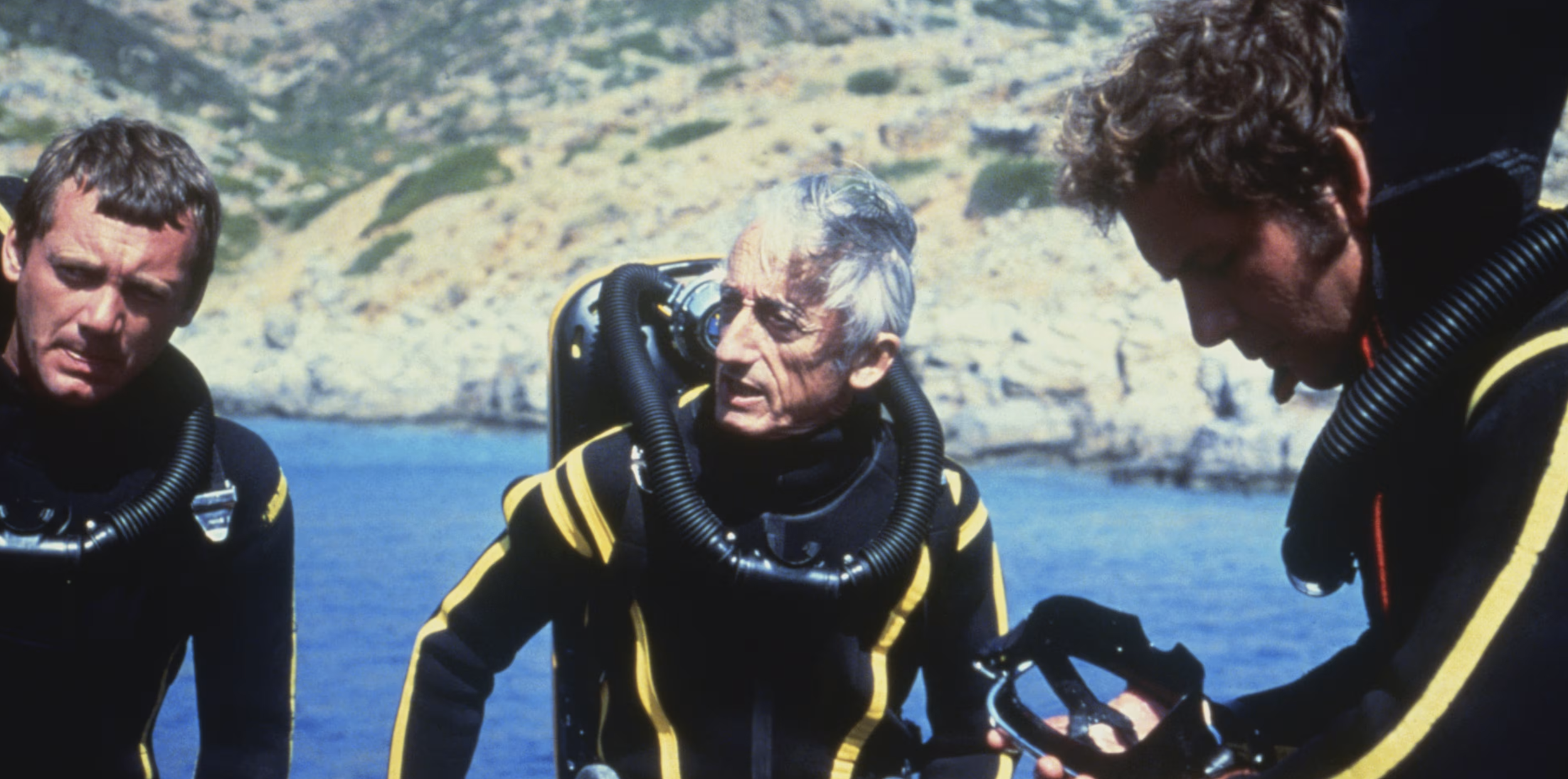
Jacques Cousteau
What is Solo Diving?
By definition, solo diving is the practice of scuba diving without a buddy, where the diver plans and executes their own dive assuming no immediate assistance from another person whilst underwater.
From 1940 to 1950
When recreational scuba first became achievable following Jacques - Yves Cousteau and Émile Gagnan's revolutionary invention of the Aqua-Lung in 1943, many early dives were conducted alone or with minimal structure, with the buddy system as we know it today, not yet being standardised. As a result, early dive pioneers operating newly developed demand regulators often:
Dived alone for exploration or work
Had limited training or formal procedures
Relied heavily on personal judgment and self-sufficiency
From 1950 to 1970
As recreational diving became increasingly accessible and ultimately boomed during the 1950’s, both training agencies and military organisations recognised that shared responsibility significantly reduced risk. Between 1950 and 1970, buddy systems rightfully became pivotal to mainstream dive education, especially as scuba continued to be opened up to a broader public. During this period:
Solo diving became discouraged
Diving alone was framed as unsafe or reckless
Formal training focused almost exclusively on buddy-based procedures
Despite this, many experienced divers such as photographers, spear-fishers, and explorers, continued to dive solo out of either necessity or practicality. In this sense and given what we understand about the origins of scuba, solo diving isn't actually anything all that new, and historically predates all known buddy systems.
From 1990 to 2000
During the 1990’s, Solo diving began to re-emerge as a more formalised and structured practice. Rather than being framed as rule-breaking, it was refocussed on being self-reliant with strict and extensively defined safeguards. This expectedly led to the development of dedicated training programs by agencies such as:
The introduction of these programs finally emphasised and acknowledged a reality long already understood by many, that a diver should always be capable of self-rescue, whether diving alone or with others.
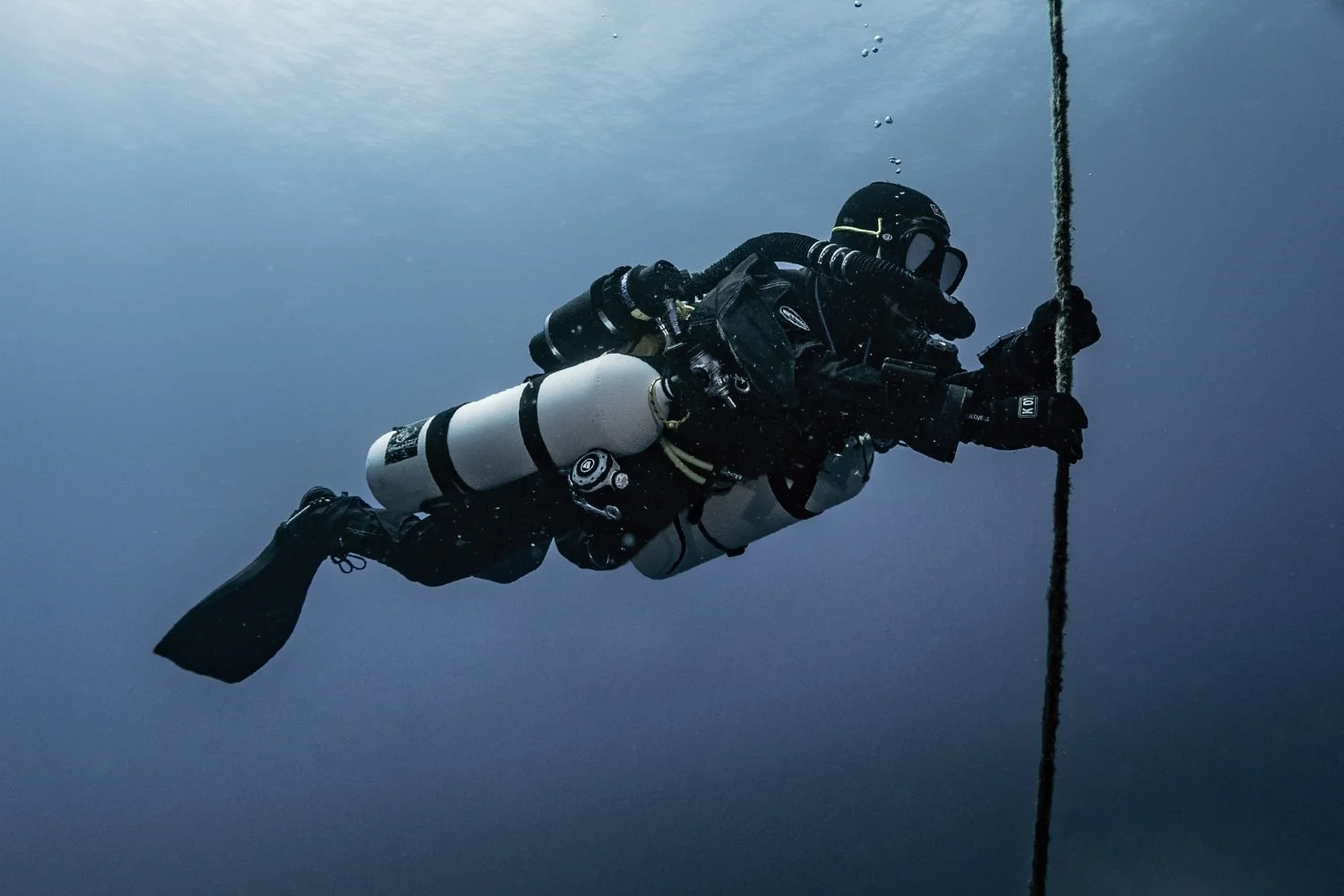
Why Dive Solo in the UK?
In the UK, unlike other parts of the world, solo diving takes on a unique character shaped by our colder waters, ever shifting visibility, and some of the most underrated marine ecosystems in Europe.
The UK is a farcry from tropical drift diving with endless sunlight. It’s quieter, darker, and more deliberate, and for many divers, this is exactly the appeal. Our waters demand respect. Strong tides, limited visibility, and low temperatures naturally encourage careful planning. Solo diving here isn’t about isolation for ones own sake; it’s about self-reliance, awareness, and moving at your own pace.
Aside from various reported negative factors, there are undoubtedly contrasting upsides to scuba diving alone, such as the ability to:
Slow down and observe marine life without distraction
Practice precise buoyancy and navigation skills
Choose your depth, duration, and objectives freely
Experience a rare sense of calm beneath often-busy coastlines
In kelp forests, wrecks, or sheltered sea lochs, solo diving can feel almost meditative, with nothing but the sound of your own breathing and the soft movement of water around you.
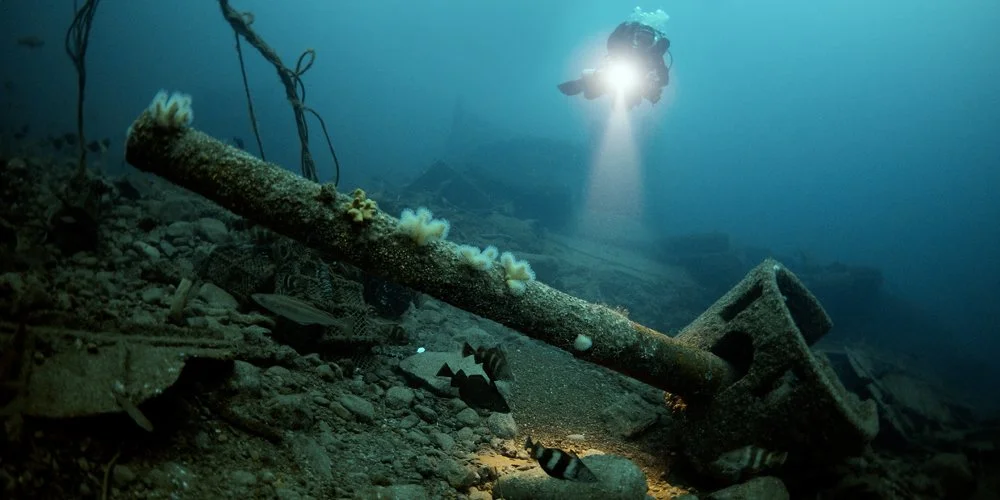
The Realities of Diving Solo
UK Conditions can change quickly, offering no forgiveness for diver complacency, and help often far away. That’s why the most experienced solo divers approach every UK dive with a conservative mindset.
Key considerations include:
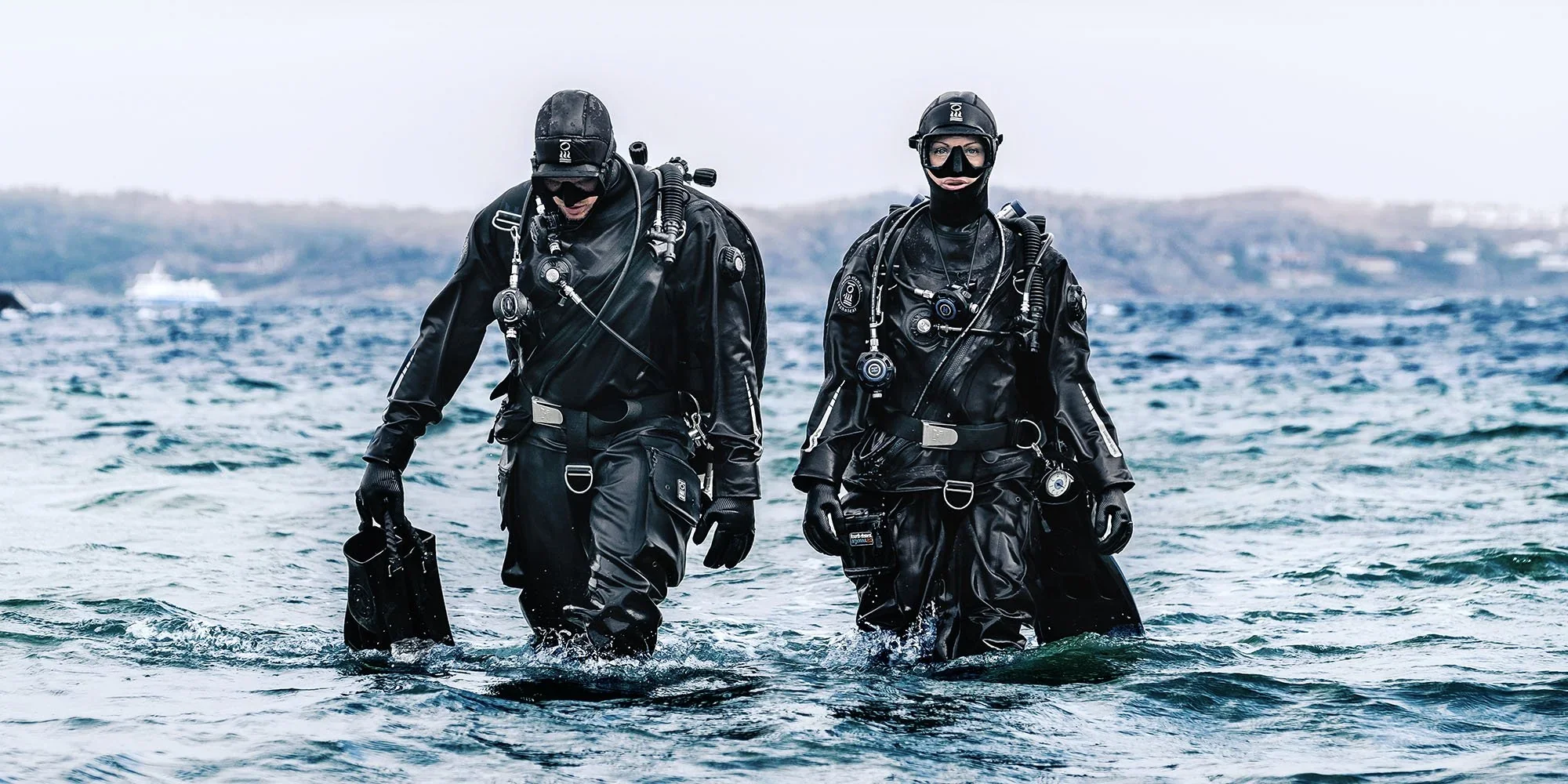
Cold water: Drysuits are the norm all year-round in much of the UK
Visibility: Often limited, sometimes excellent, but rarely predictable
Surface conditions: Wind, swell, and tides matter as much as what’s below
Logistics: Shore exits, surface cover, and emergency access must be planned
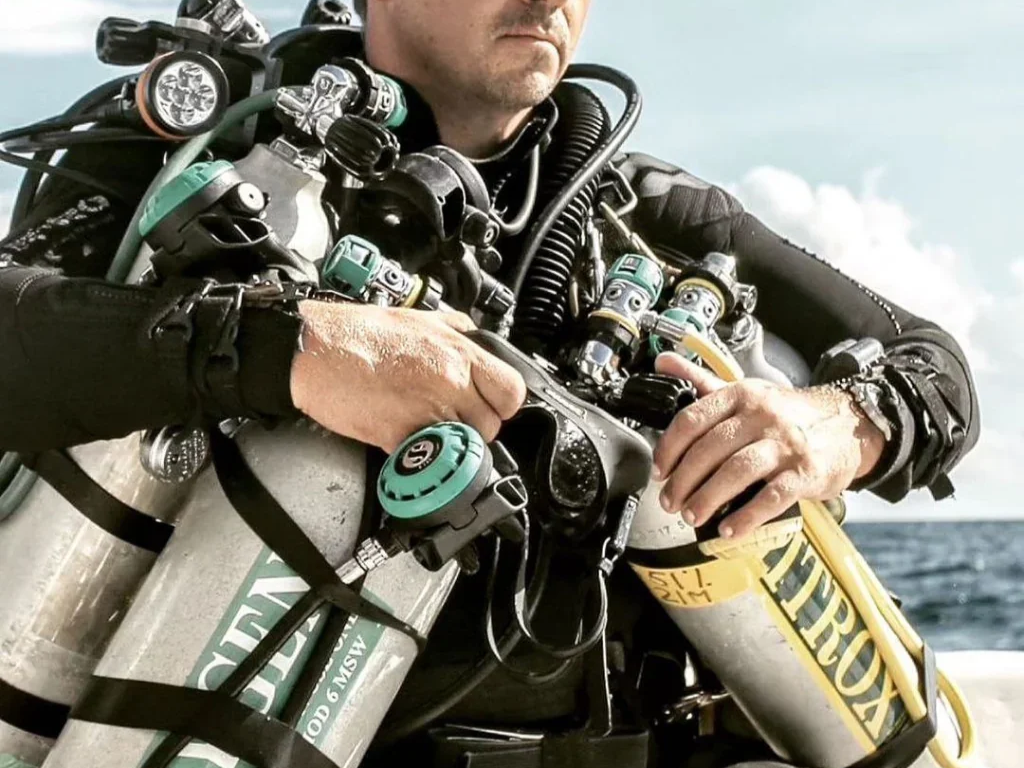
As part of any kit setup, a solo diver should always carry redundant gas, multiple accessible cutting tools, a backup navigation device, and several surface signalling devices. The clear emphasis here is on preparation rather than bravado.
Why Skill & Mindset Matter More Than Certification
While formal solo or self-reliant diving courses can be valuable, mindset is just as important. Solo diving in the UK rewards divers who are:
Calm under pressure
Comfortable aborting a dive early
Methodical in equipment checks
Honest about their limits
Many divers build solo experience gradually, starting with shallow, familiar sites and excellent conditions before progressing to deeper or more complex dives.
UK Locations That Suit Solo Diving
Not every dive site is appropriate for solo diving, but some environments lend themselves well to it:
Sheltered sea lochs in Scotland offer minimal current and rich marine life
Cornwall’s kelp forests provide shallow, immersive dives with natural navigation
Quiet shore dives in Wales or the North East can be ideal in settled weather
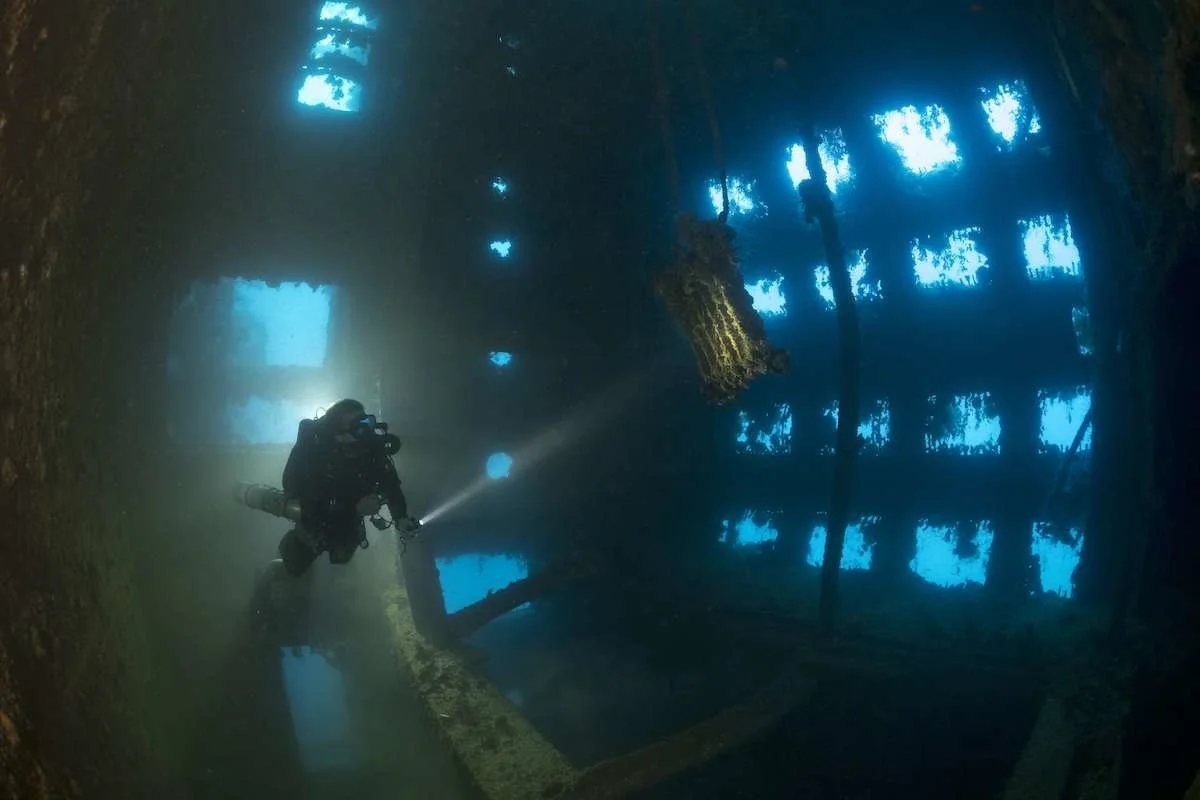
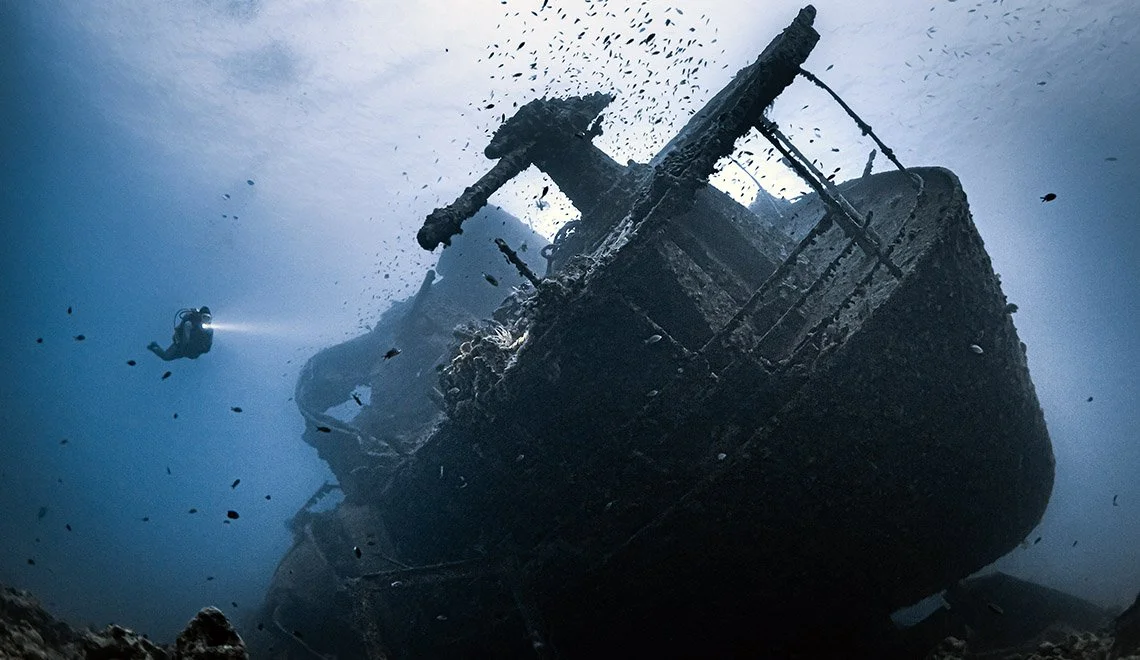
Solo wreck diving is considered far more controversial and should only be attempted with significant experience in such environments, with ample redundancy, and within conservative limits.

The Mental Side of Diving Alone
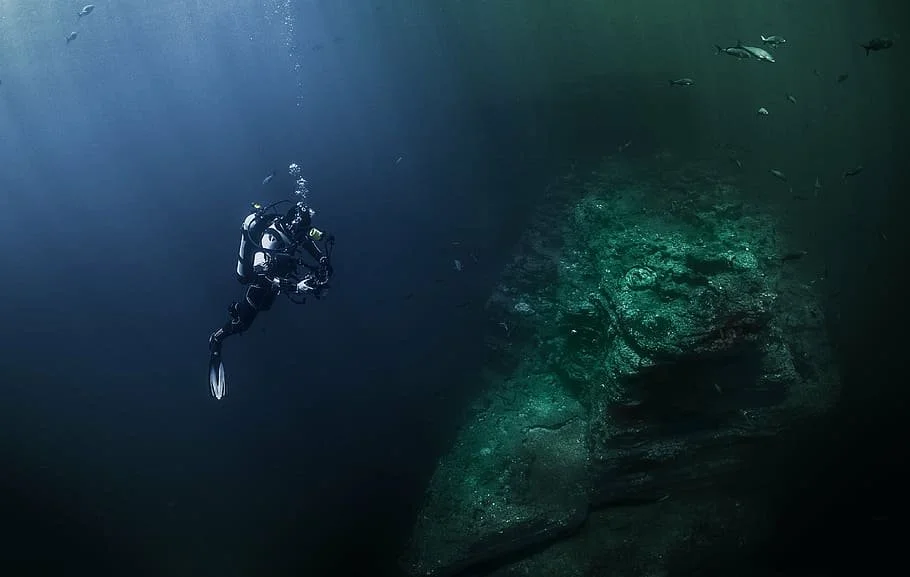
Diving solo undoubtedly strips away social reassurance. There’s no buddy to check your air, to confirm your heading, or to share a moment of surprise. Expectedly, this can feel daunting at first, but it’s also what makes the experience all the more powerful.
Many divers have reported that solo diving has considerably sharpened their situational awareness, making them more attuned to subtle changes in current, buoyancy, and breathing, amounting to an uninterrupted conversation between them and their environment.
Is Solo Diving Right for You?
Solo diving isn’t about proving anything. It’s about responsibility, patience, and respect for the water. The UK’s cold, green seas may not shout for attention but when you dive them alone, they speak quietly and clearly.
If you enjoy planning as much as executing, value self-sufficiency, and are comfortable making conservative decisions, solo diving can be one of the most fulfilling ways in which you will ever dive.
Any decision to ultimately dive solo needs to be made entirely by the individual, and should factor several important variables which should include:
Certification:
Have you achieved advanced or expert level training, and can you comfortably demonstrate and recall these skills or abilities?
Experience
Have you attained sufficient experience to recognise and plan all aspects of your dive, manage and rectify common problems underwater and identify threats or danger?
Comfortability
Are you comfortable having no other redundancy than the kit you carry, and are confident with all aspects of your equipment management?
Evidently, it serves as a stark warning that any decision to go solo without achieving any of the widely suggested and documented pre requisites, only serves to put your own safety at risk, that of others, will likely invalidate any insurance, and could ultimately end up costing you your life.
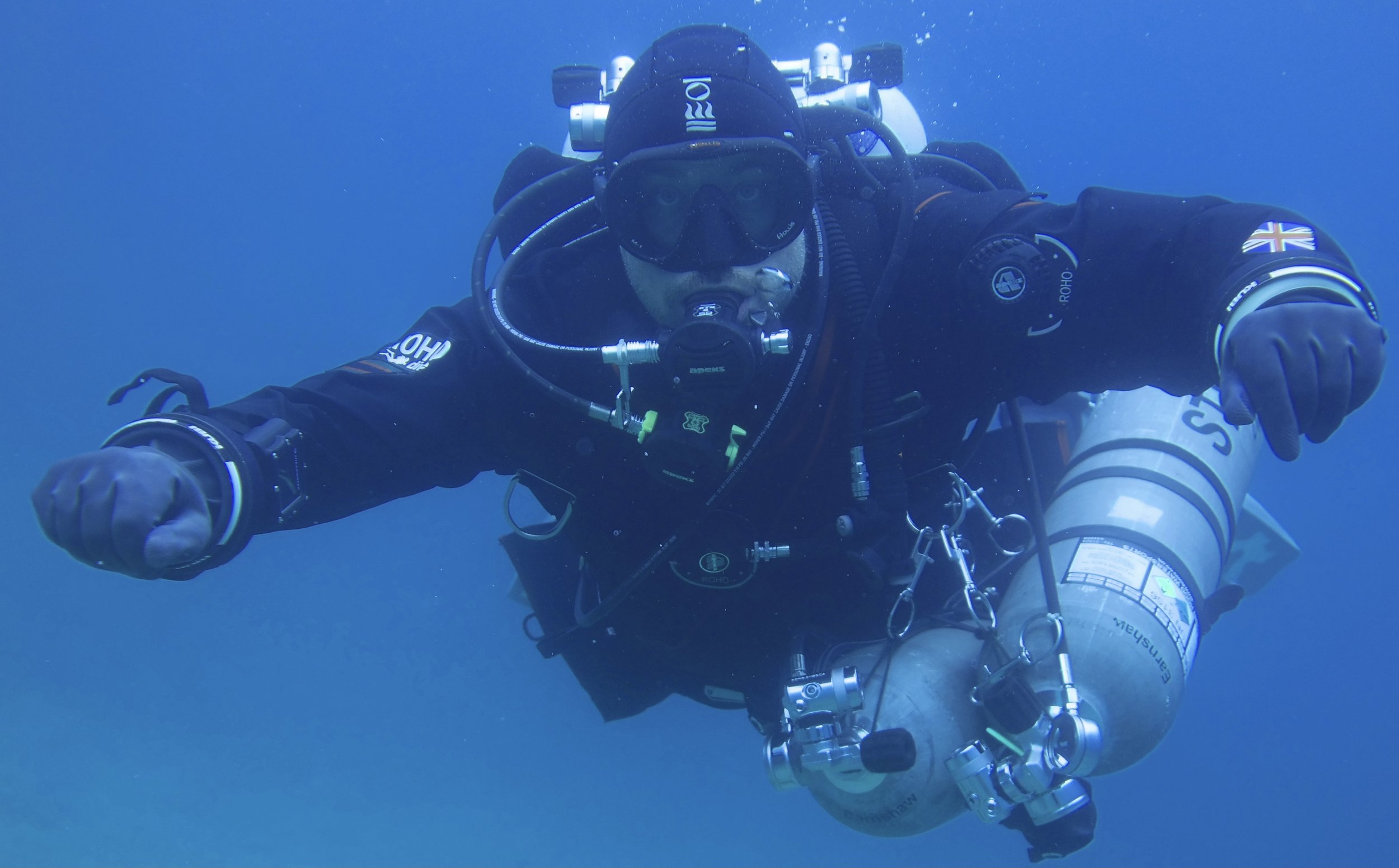
Steve Earnshaw - Swanage, Dorset UK
The Shift From Dependency to Accountability
One of the most valuable elements of solo diving isn’t a divers physical ability, but their psychological discipline and unwavering resilience.
Solo diving removes the safety net of shared responsibility, with every decision from descent to exit, resting solely with you. Learning to solo dive reinforces:
Early abort decisions
Comfort with calling dives for minor issues
Emotional control under stress
Many divers have claimed that even if though they never plan to solo dive regularly, learning to do so has dramatically improved their confidence and discipline in all contexts of diving.
Solo Vs Self Reliant Diving
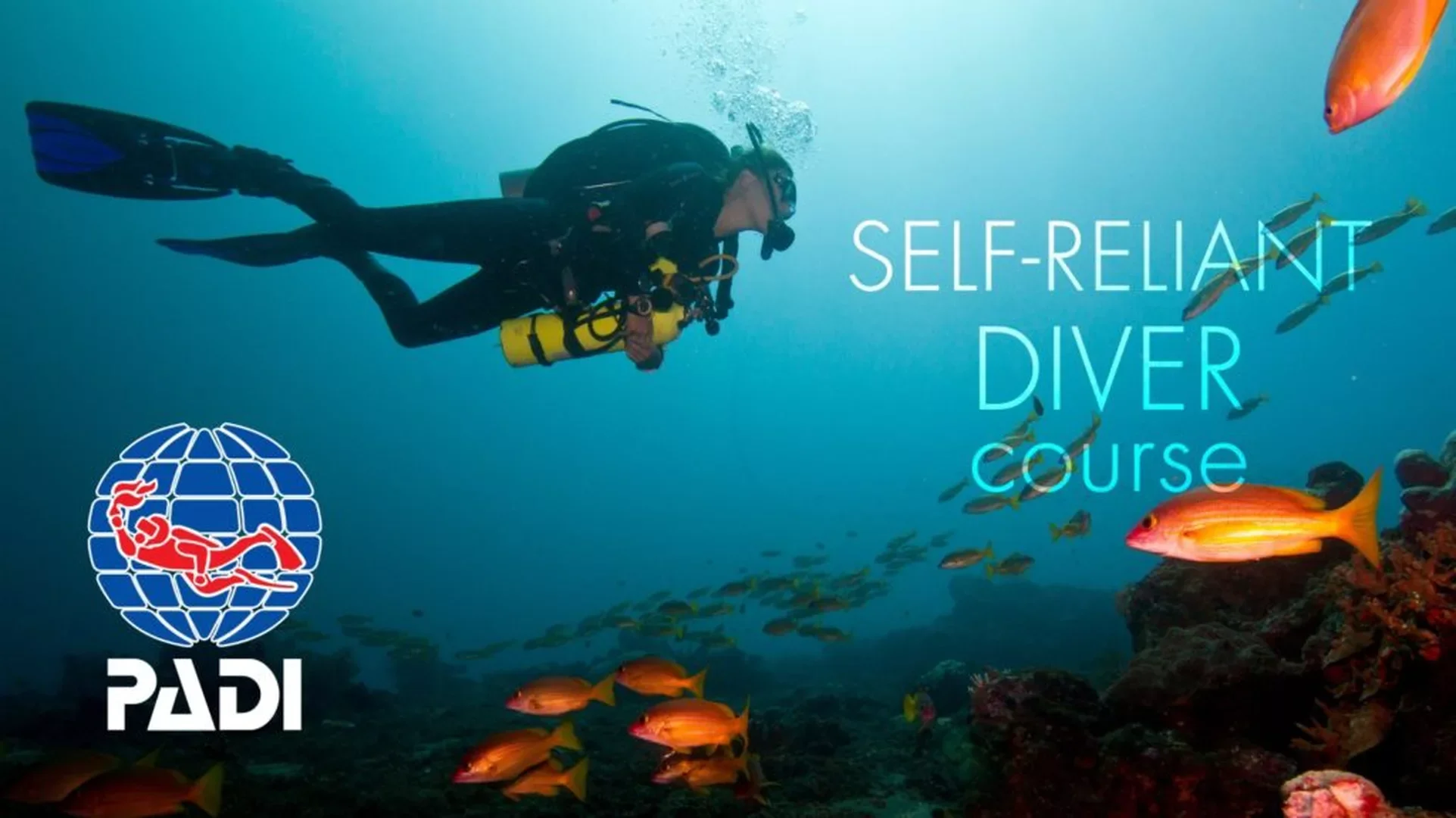
In short, Self-Reliant Diver is a specialty course offered by PADI that enhances the basic level training for certified divers to plan and execute dives assuming no immediate external assistance.
Despite the name, self reliant diver is often somewhat misunderstood. It does not encourage abandoning the buddy system or ignoring dive planning norms, but instead, acknowledges the uncomfortable truth that in an emergency, you may be the first and only solution. The Self-Reliant Diver course emphasises:
Redundant life-support systems
Conservative dive and gas planning
Situational awareness and navigation
Calm, methodical problem management
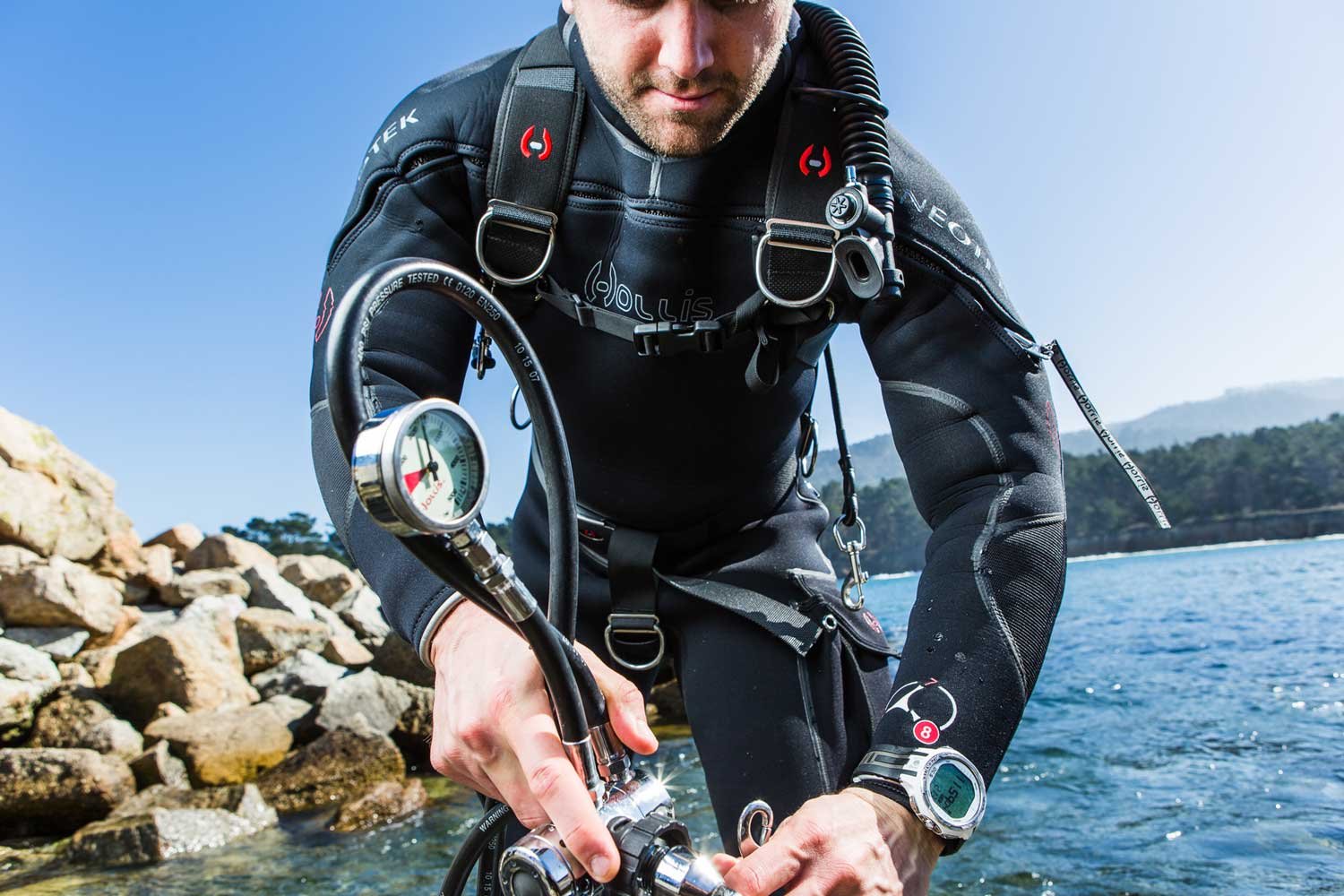
As stated, modern recreational diving is built entirely around the buddy system, but experienced divers know that the reality of issues and emergencies encountered underwater often do not replicate the calm and controlled approach to problem solving seen during initial confined water training. Visibility can reduce, currents can pull buddies apart, and unfortunately, despite the numerous tiers of certification, skill levels don’t always match.
The PADI Self-Reliant Diver course was created entirely to address any skills gap, focusing not on diving alone for one’s own sake, but to enhance personal responsibility and independent problem solving in challenging circumstances. At its core, Self-Reliant Diver is centrally about one thing: ensuring that you can safely look after yourself underwater, whether you have a buddy beside you or not.
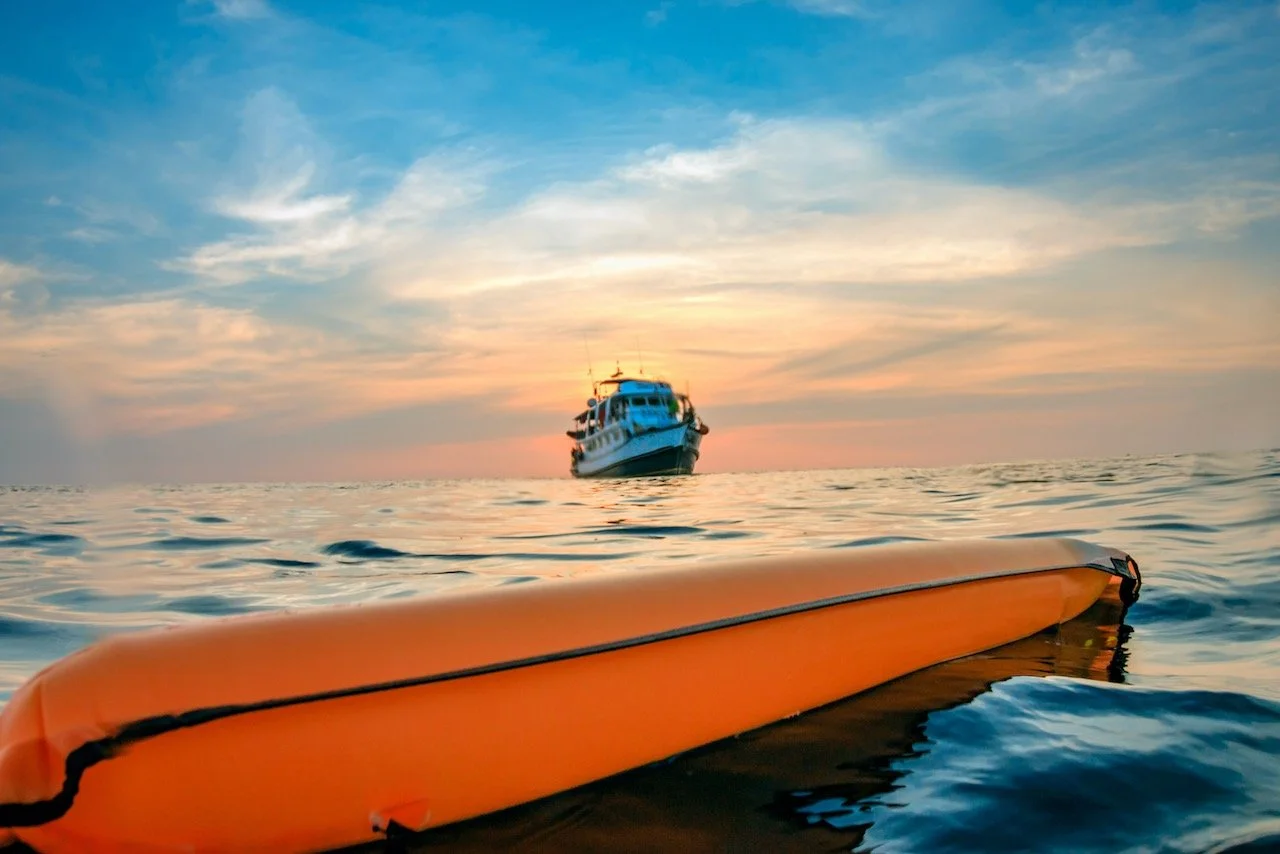
Discouraged or Outright Disallowed?
Whilst we know a number of dive agencies presently offer tried and tested courses for those aspiring to become efficient solo divers, not every dive site will permit this practice, no matter how well trained you may be.
Agencies which presently offer either solo or self-reliant diving style courses in the UK




Independent Diver
Agencies who presently do not offer either solo or self-reliant diving style courses in the UK

BSAC do not endorse solo diving
Where Can You Solo Dive?
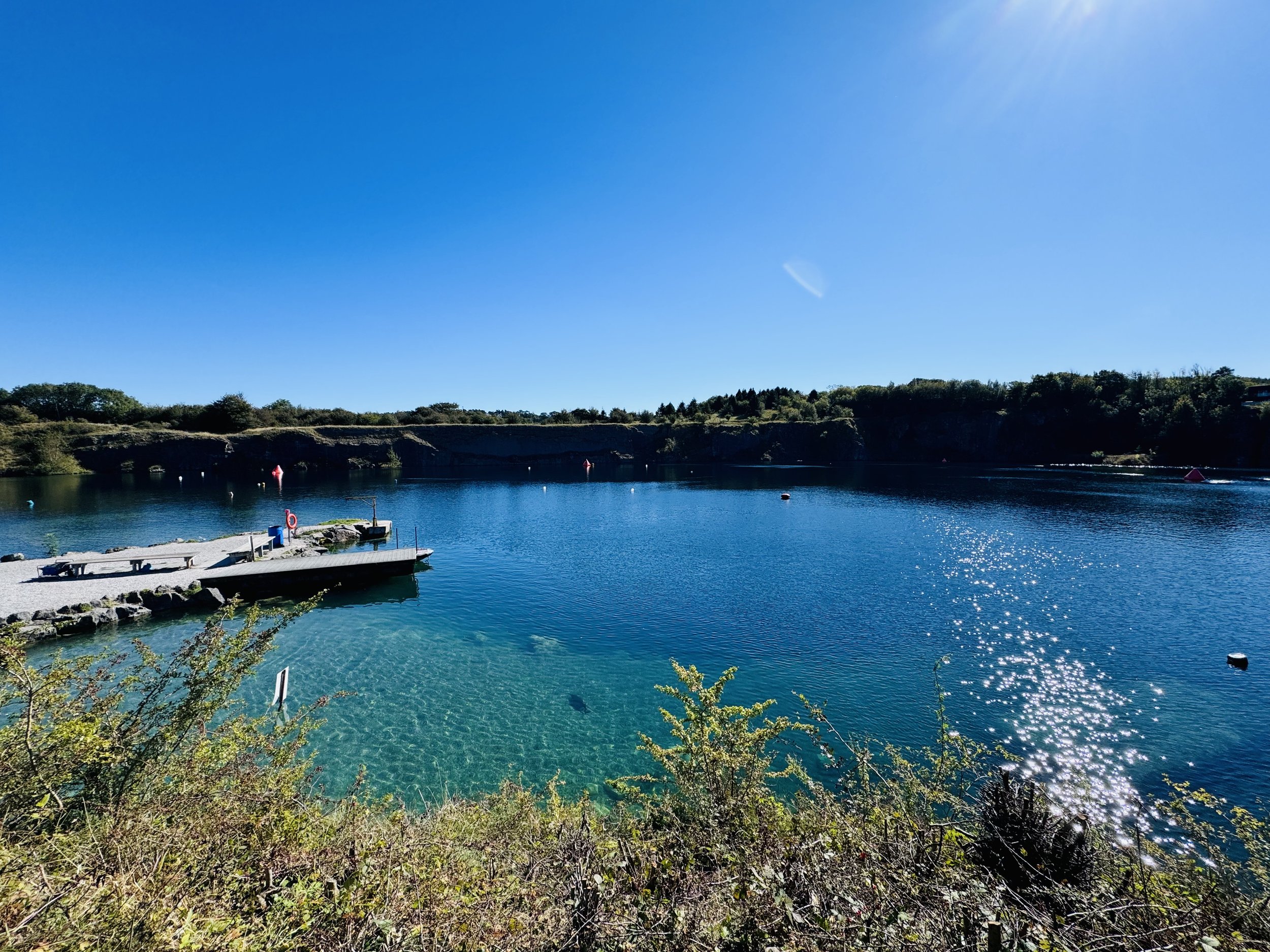
Solo diving IS permitted here if a diver is certified and trained to do so, and all site rules are adhered to.
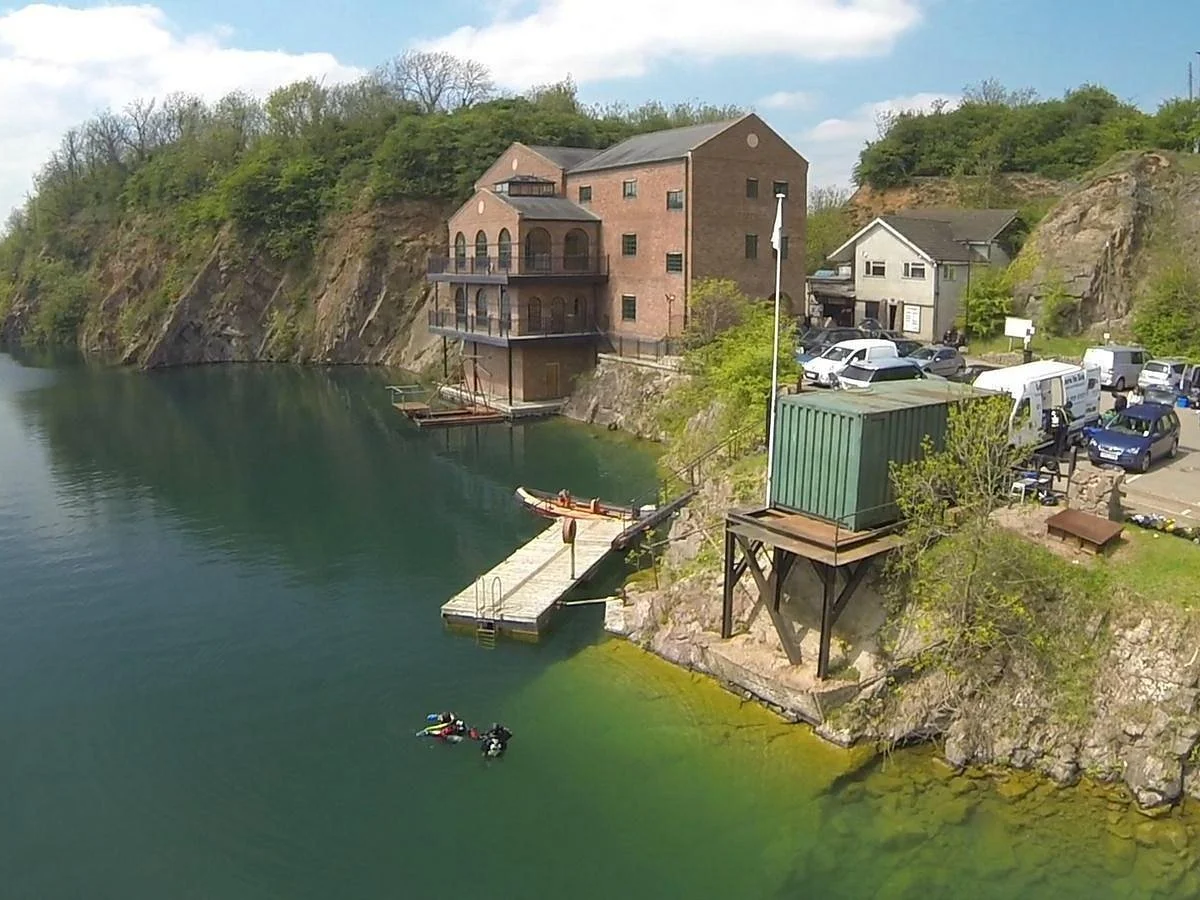
Solo diving is NOT permitted here as stated in their website terms and conditions of use.

Solo diving is NOT permitted at Eight Acre, and is stated on the home page of their website.

Solo diving IS permitted, here but divers must be registered, be certified to dive independently and follow site rules at all times.
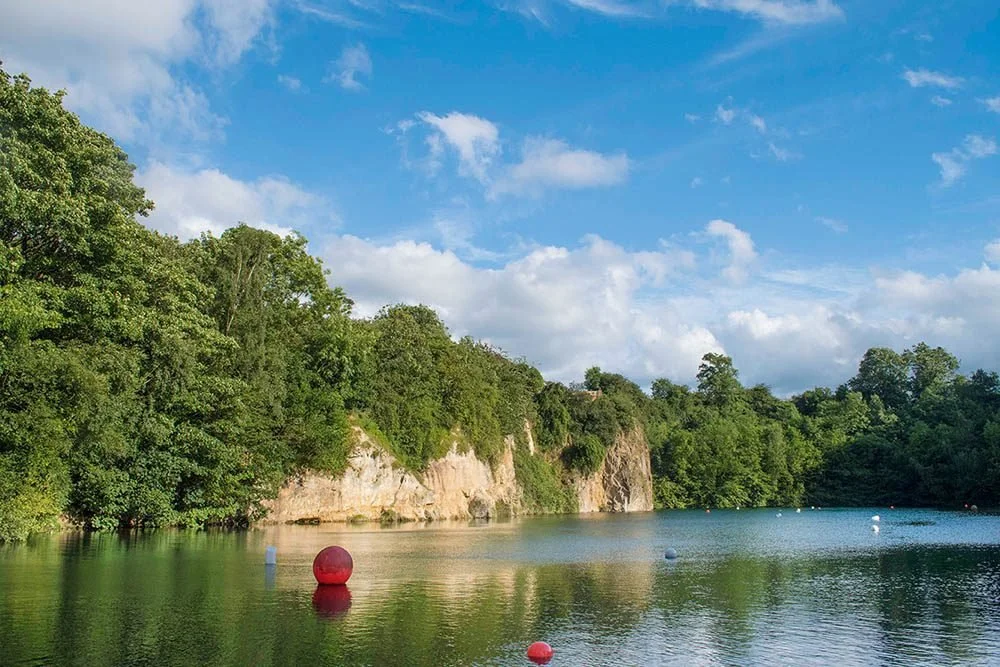
Dosthill DO permit solo diving, providing divers are certified and adhere to the site rules and safety regulations.
Our Thoughts…
In order to understand the concept of solo diving, one needs to understand either the necessity or personal desire for an individual to want to do so to begin with.
An example of this is that many of us at SEPE Diving are avid photographers, whom on countless occasions have spent an entire dive hovering above some rare and interesting marine life in order to acquire the perfect snap. By removing distractions such as buddy responsibilities or interruption, a photographer has more time to focus on their subject, thus making the most of an opportunity.
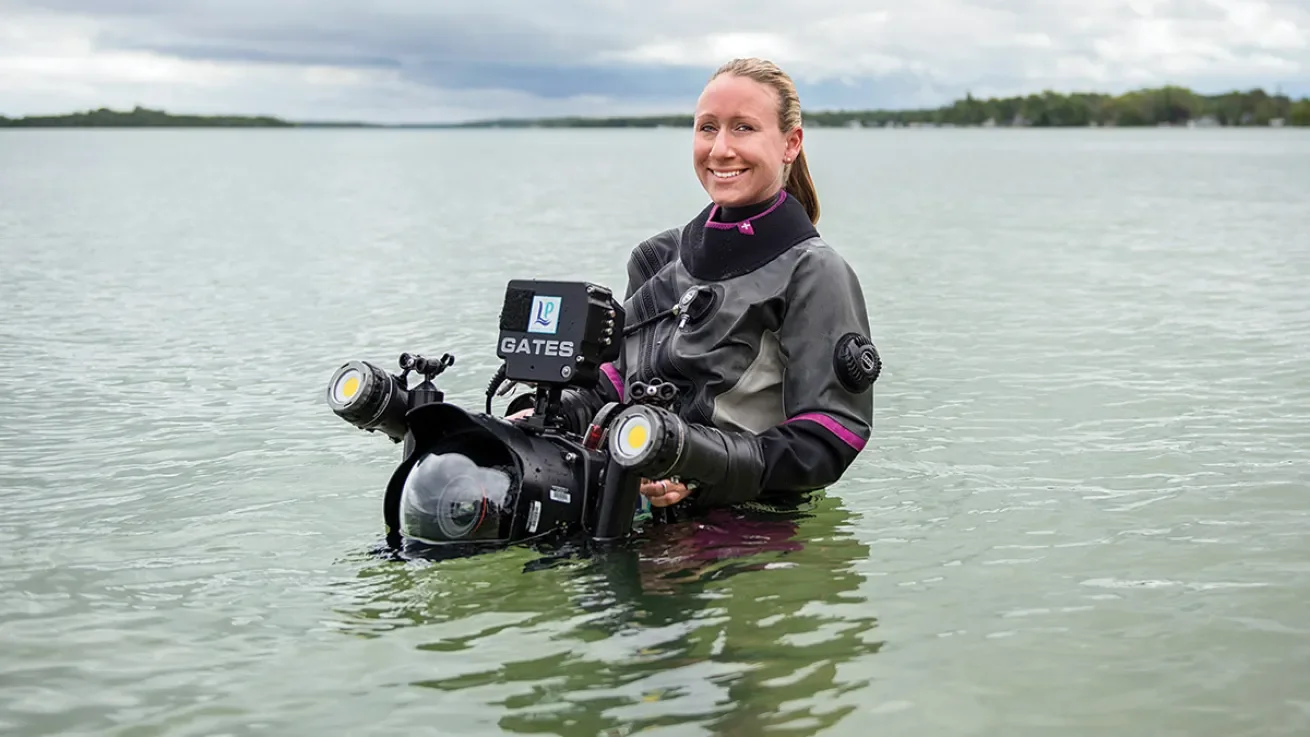
One of the industries most respected photographers - Becky Kagan-Schott